
Sustainability Report: 2025 Highlights and Impact


Executive Statement
2025 was a landmark year for ESG Book, marked by profound commitment to sustainability and significant innovation across our operations and product offerings.
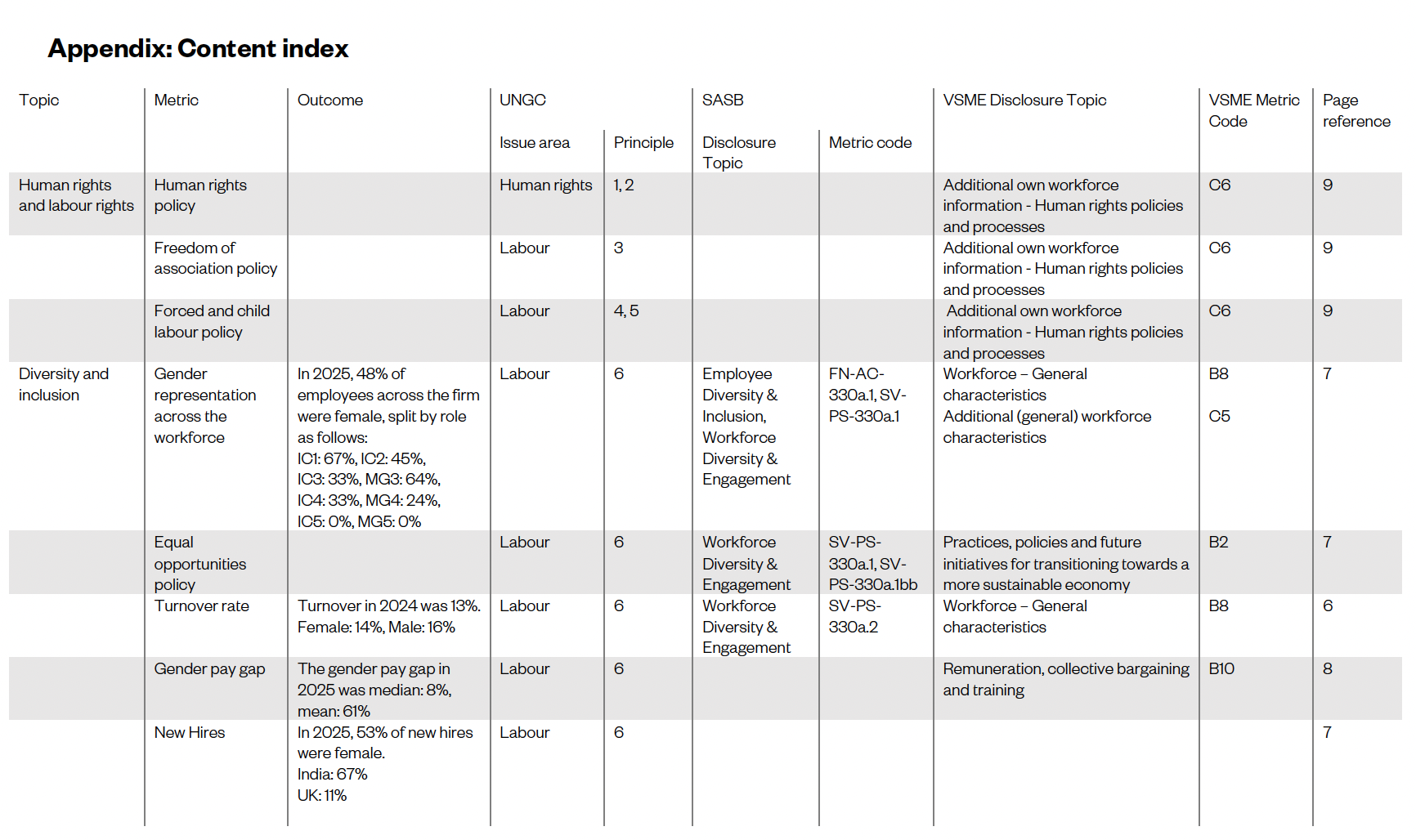
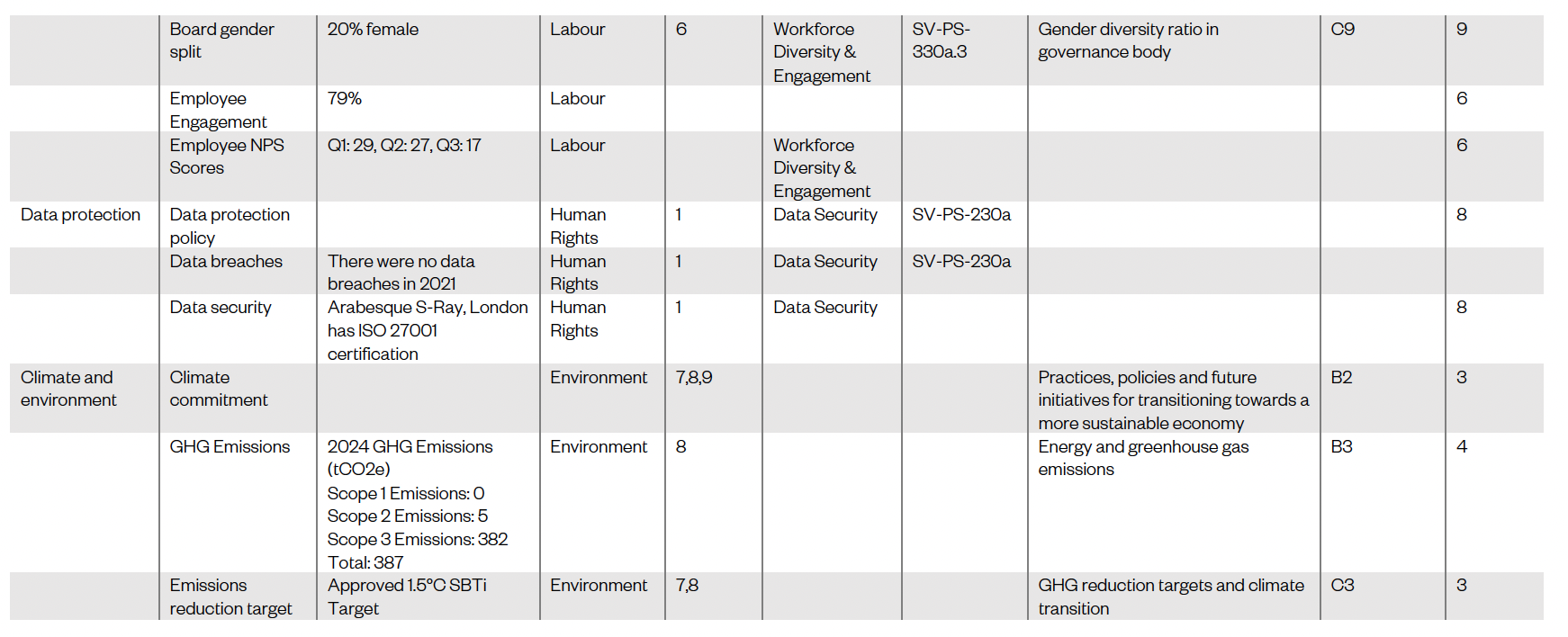
We proudly surpassed our SBTi target, achieving a 97% reduction in Scope 1 and 2 emissions from our 2018 baseline, supported by the relocation of our Frankfurt and Delhi offices to LEED Gold-certified buildings, while our commitment to governance and data security was underscored by achieving our ISO 27001 certification.
As we look ahead, ESG Book is strategically positioning itself as a key sustainability data partner for global banks, focusing on closing critical data gaps and supporting the emerging transition finance market. Our product strategy for 2026 centers on making our value clearer, expanding non-commoditized data
offerings, and overcoming resistance to disclosure requests. Internally, we remain dedicated to continuous improvement, with a future focus on reducing Scope 3 emissions, advancing employee welfare through our Global Career Framework, and increasing female representation in senior leadership.
This report will be the last one under the ESG Book scope, following our integration with the EthiFinance Group. We are ready to build on the significant momentum of 2025 in this exciting new chapter, utilising our combined resources, ambition, and commitment to change, to leverage data and technology to
empower financial markets and drive a more resilient and sustainable future for all.
Introduction to ESG Book
ESG Book is a global leader in sustainability data and technology. Launched in 2018, the company provides a comprehensive suite of ESG and climate data, scoring methodologies, and analytics tools used by many of the world’s largest financial institutions.
Covering over 76,000 companies, ESG Book’s platform enables clients to access ESG and climate metrics at both the company and portfolio level. The firm’s SaaS-based data management and disclosure platform provides access to more than 240,000 corporate disclosures, allowing companies to report to
stakeholders in real-time across multiple frameworks.
As a talent- and innovation-led organisation, ESG Book’s people drive its differentiation and competitiveness. The company is deeply committed to investing in its workforce, fostering an environment that encourages drive, collective endeavour and a commitment to excellence
In addition to delivering ESG and climate data through enterprise feeds, ESG Book’s flagship products — the ESG Performance Score and ESG Risk Score — enable clients to align portfolios with frameworks such as SASB’s Materiality Map and the UN Global Compact. Its suite of climate analytics supports
alignment with the GHG Protocol and the Paris Agreement.
In 2025, ESG Book made further advancements to its disclosure platform, easing the burden of reporting companies by introducing the AI prefill tool to pre-populate their on-platform disclosures. Both disclosure documents uploaded by the reporting corporate, and any publicly disclosed information collected and
validated by ESG Book, are used to pre-fill disclosures across multiple reporting frameworks covering a full suite of over 30 emissions metrics and 350 ESG metrics.
ESG Book is an active contributor to the global sustainability ecosystem, partnering with international organisations including the EFRAG Voluntary Sustainability Reporting Standard (VSME) Community and Banking for Net Zero (B4NZ), participating in the AFME European Sustainable Finance Conference, and partnering with IFRS and the Global Reporting Initiative (GRI). Additionally, we worked on disclosure projects with the Global Enabling Sustainability Initiative (GeSI) and the Watch & Jewellery Initiative 2030 (WJI) as well as contributing to the Women's Empowerment Principles (WEPs) Transparency and Accountability Roadmap.
In this context, we are pleased to present the 2025 non-financial overview of our sustainability policies, initiatives, metrics, and targets. We plan to enhance our reporting each year, in line with frameworks including SASB, the UNGC, and the Voluntary Sustainability Reporting Standard (VSME) to ensure consistent and comparable reporting, increasing our coverage of material metrics year-on-year.
Our Environmental Commitment
In 2025, the ESG Book Sustainability Committee worked to bring sustainability further into the lives of employees. Both the Frankfurt and Delhi offices changed location, moving into LEED certified sustainbale buildings, and team volunteering days were utilised to help local environmental causes. Volunteering days were coordinated across different offices to take place on same date, including activities such as helping in community parkland and litter picking in the city. Additionally, ESG Book turned its eye externally, publishing critical articles on, among others, transition finance, sustainability reporting standards, and
EIOPA’s (European Insurance and Occupational Pensions Authority) updated guidelines. In total, we contributed to eleven regulatory consultations, and passed 12,000 subscribers to the monthly ‘Policy Digest’ release from the thought leadership team. ESG Book’s Environmental Statement, outlines our
commitment to address pivotal environmental concerns that intersect with our business operations, to serve as a catalyst for positive change within our operations and direct supply chain, and to make a positive impact within the communities in which we work.
ESG Book’s commitment is also confirmed by our alignment with action to keep the increase in global temperature to 1.5 degrees Celsius. In 2023, ESG Book set a target with the Science Based Targets initiative (SBTi), committing to an emissions reduction in line with a 1.5 degrees Celsius pathway, and to measuring our scope 3 emissions. We produced our first Scope 3 estimate for 2024, and are continuing to work with external carbon accounting company Carbometrix to build on the accuracy of these results each year. The original citation of our SBTi commitment can be found on the Science Based Targets
initiative website.
Climate Change
As a business, we are committed to reducing our greenhouse gas emissions and have taken action to realise this ambition through the SBTi target above. The greatest changes made in 2025 were the relocation of our Frankfurt and Delhi offices. Both locations moved to LEED Gold-certified buildings signifying integrated sustainability building design and energy efficiency. For example, the office tower in Frankfurt utilises geothermal energy storage, heat recovery, and its own combined heat and power stations, while the India facility supports water sustainability thorugh rainwater harvesting and on-site sewage treatment. All offices are located near to public transport hubs to encourage low-carbon commuting. Next, we will be looking to move the London Office to a space that similarly matches the standards we have set elsewhere.
Additionally, ESG Book’s operational computing is hosted on Google’s Cloud Platform, which has a netzero emissions target, and our ongoing flexible working arrangements reduce the need for daily commuting. Our travel policy also encourages employees to make sustainable choices when travelling for business.
An employee survey revealed that in 2025, 23% of employees chose to travel to work by car or motor scooter, 66% opted for public transport, with the remaining 11% split between walking and cycling. The same survey also revealed that 81% lunch-time meals taken by employees are vegetarian.
Quantifying our Impact
ESG Book (then Arabesque S-Ray) first started measuring our greenhouse gas emissions from a baseline of 2018, and in October 2020 had a ‘well below 2 degrees Celsius’ emissions reduction target approved by the SBTi, a reduction of 30% based on baseline 2018 figures. After the company rebranded to ESG
Book, we re-applied for a stronger 1.5 degree target, which was set in September 2023.
For our 2018 baseline, our scope 1 emissions were 73 tCO2e, and our scope 2 emissions were 106 tCO2e. Table 1 shows our yearly emissions break-down and progress by scope, measured to align with the GHG protocol. All calulations were performed by external carbon accounting firm, Carbometrix. Note that in
2020 ESG Book’s workforce was almost entirely working from home. As a result, we do not have comparable figures for 2020.
Our 2025 emission figures show a total reduction in our scope 1 and scope 2 emissions of 97% from the 2018 baseline, far more than required for our current SBTi target, driven this by a reduction in office size and a shift of two oficces to energy efficient, LEED-certified buildings.
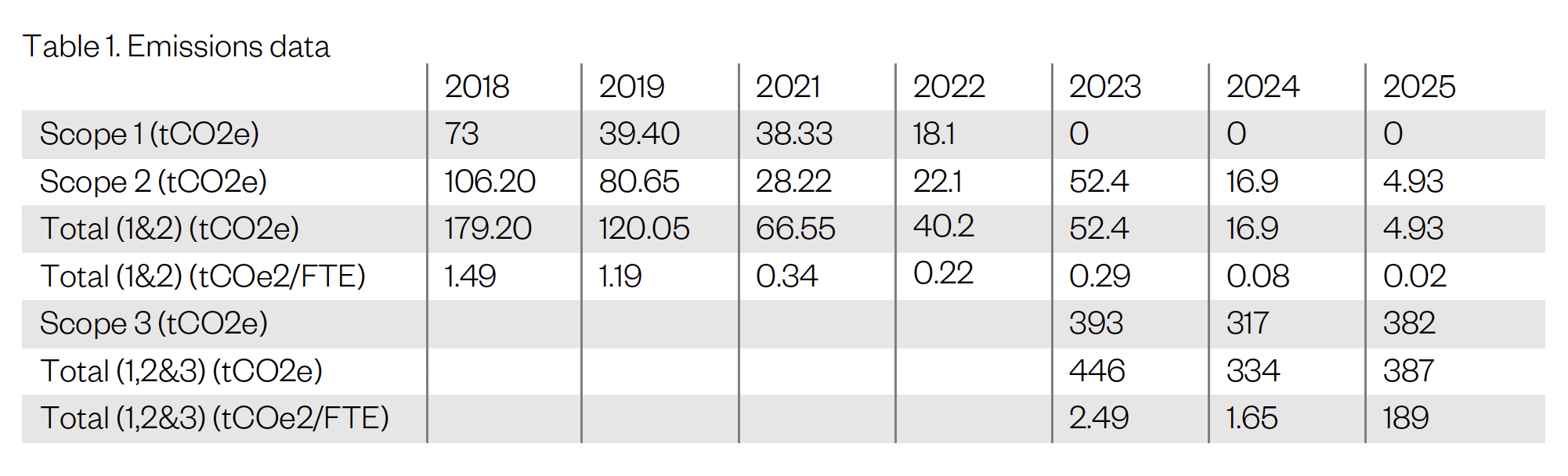
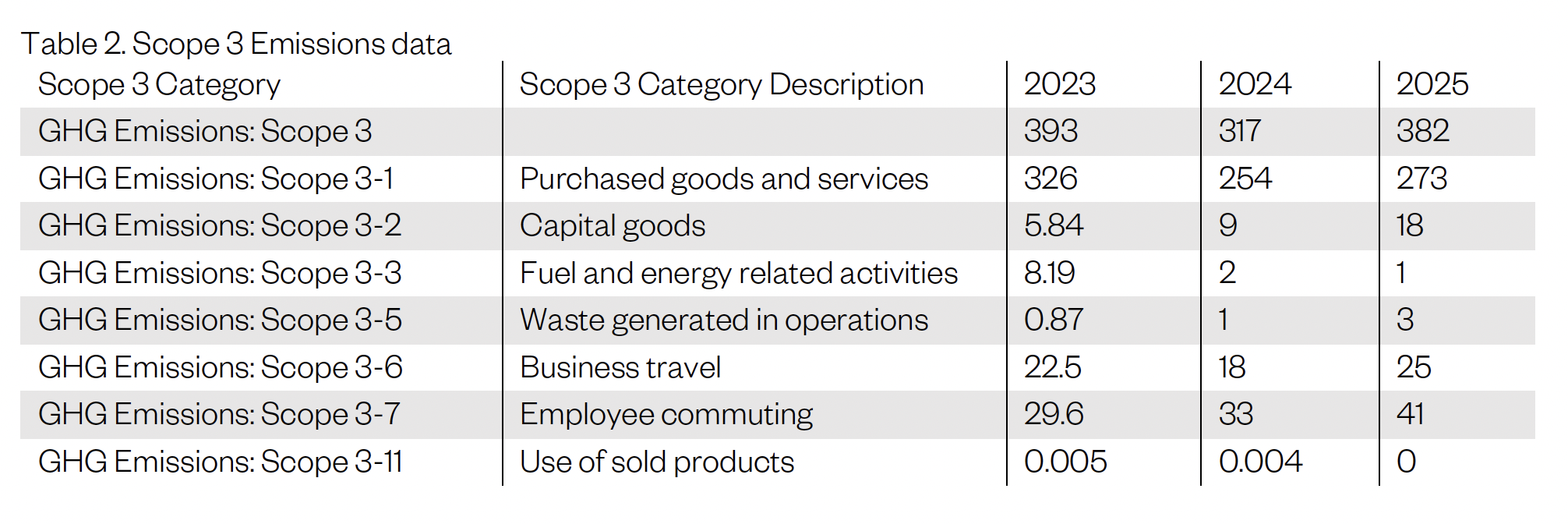
Table 2 displays a breakdown of our Scope 3 emissions, showing that Scope 3 significantly outweighs both Scope 1 and Scope 2 emissions combined. Scope 3 emissions increased almost 21% from 2025, in large part due to increased expenditure on purchares goods and services. This will the focus of reducrtions in
the future.
Our Social Policies
ESG Book has a comprehensive suite of employee benefits, designed to provide an enjoyable work environment, boost productivity, and encourage retention. We believe in aligning the success of our company with the contributions of our team, and so foremost amongst these is the Virtual Shares Incentive
Programme (VSIP), designed to reward and motivate all employees by providing them with a stake in the future growth and success of the business.
Additionally, ESG Book offers global access to both eyecare and general healthcare / medical insurance which, in the UK, includes cover for an employee's partner and children. We also provide global income protection through Canada Life, Life insurance through Group Life Assurance, and employee assistance
through TELUS who offer emotional, financial, wellbeing and other work-related support.
To help employees better manage their time and commitments outside of work, we provide a high degree of flexibility structured around “core hours” in each office location. Additionally, in July and August we offer Summer Fridays where every Friday employees are encouraged to reduce their commitments after
midday, and finish their work day by 2pm. Employees also receive 30 days annual leave globally, plus any local or bank holidays applicable in their location.
ESG Book offers learning and development opportunities for all employees, with each employee having a personal yearly budget they can spend on their own learning and development objectives, including but not limited to training programmes and online courses and certificates.
Beyond global benefits, we have an additional range of benefits offered country-by-country. This includes pension schemes in the UK and Germany where ESG Book contributes 3%, up to a salary threshold of £50,270, and 9.3%, up to a salary threshold of €90,600, respectively, a UK Cycle to Work Scheme,
allowing employees to purchase bicycles tax-free through salary sacrifice, and Wellpass in Germany, that gives employees access to fitness and wellness facilities throughout the country.
Employee Progression & Retention
While 2024 was focussed on building and rolling out out employee benefits suite, 2025 was focussed on clarity and transparency around employee pay and career progression. To this end, we developed the Global Career Framework, including a regular formalised performance review process, that introduces
clarity regarding job levels, progression pathways, competencies, and role expectations in the company as a whole and at the departmental level. This has:
- Improved consistency in performance evaluation
- Enhanced transparency in career progression
- Strengthened alignment between roles, skills, and compensation
- Contributed to a more equitable and consistent employee experience.
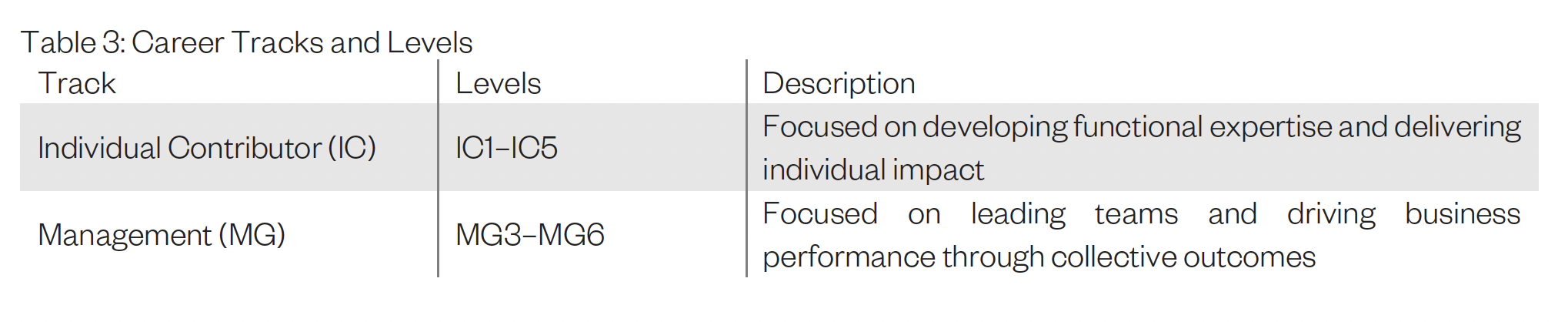
A key component of this progress was the rollout of our Talent Management Framework (Table 3) that defines role expectations, required competencies, and behaviours aligned with our company values. The framework introduces a dual career track model, Individual Contributor (IC) and Management (MG),
enabling employees to progress in line with their strengths and career aspirations.
Included in the framework was a company-wide benchmarking exercise to align employee compensation with both internal peers and external market standards, resulting in a structured and equitable pay framework that demonstrates ESG Book’s ongoing commitment to improving transparency and fairness within the company. In 2025 the company also launched a mentorship programme, facilitating employees to pair up in mentor-mentee relationships to share knowledge and grow together.
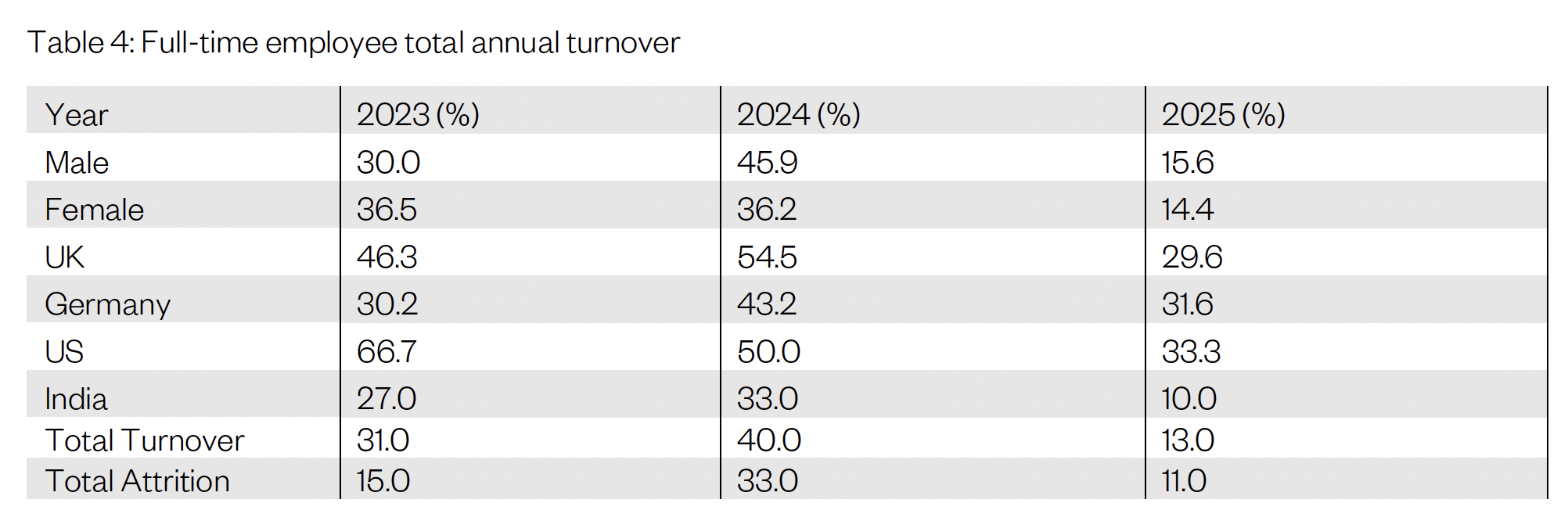
Outlined below (Table 4) is the full-time employee annual turnover, calculated excluding contractors and interns. ESG Book is continuously adapting and growing its business, going through a scale-up phase, so higher levels of turnover are to be expected. However, we are pleased to report that the measures
impleneted over the last two years, often informed by exit interviews, are taking effect. Year-on-year turnover fell by 27% from 2024 to 2025, from 40% to 13%, and attrition fell by 22%, from 33% to 11%.
While the business saw an increase in employee turnover on an annualised basis in 2024, turnover in Q4 (October to December) fell to 28%, below the historical average. This positive trend continued into Q1 2025 (January to March), indicating that the changes implemented are having a measurable impact on employee satisfaction.
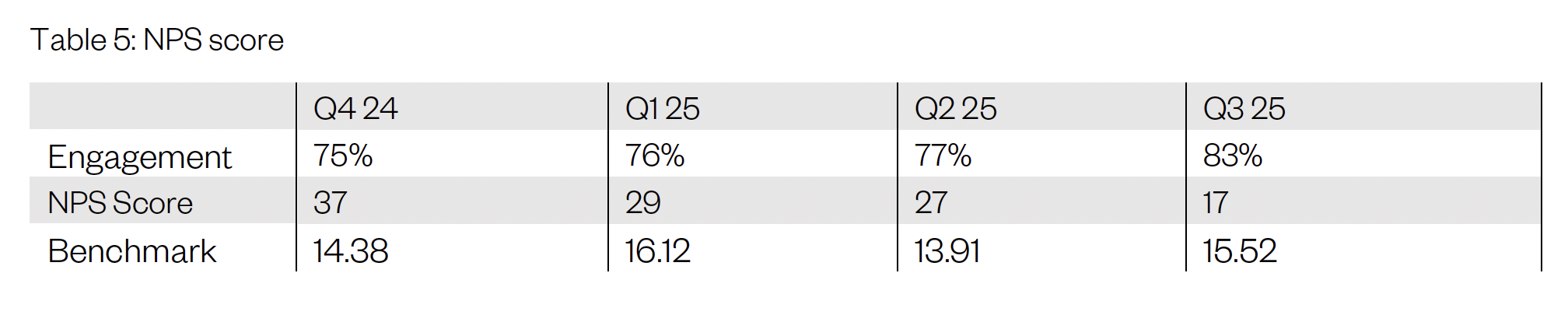
Unfortunately, while retention is up, this trend has not been reflected in our eNPS employee satisfaction score (Employee Net Promoter Score, run through the HiBob HR platform), which dropped throughout 2025 (Table 5). Despite this, the steady increase in engagement and consistent performance above the
global benchmarks, combined with the drop in turnover, shows a strong organisational commitment and trust in leadership. We hope that the new changes outlined above will help to reverse this trend in NPS score, and will continue to develop both the employee benfits package and the Career Framework to ensure ESG Book is a fair and desireable place to work.
Non-Discrimination and Diversity
We have an unwavering commitment to inclusion and diversity and a culture of equality, which is core to our values as a company and critical to our success and continued innovation.
ESG Book maintains a diversity policy that outlines our commitment to inclusion, equality, diversity, and the elimination of any form of discrimination. To this end, ESG Book is proud to be an equal opportunities employer. As such, all job listings include statements affirming that all applicants will be considered equally irrespective of race, colour, religion, national origin, sex, physical or mental disability, or age.
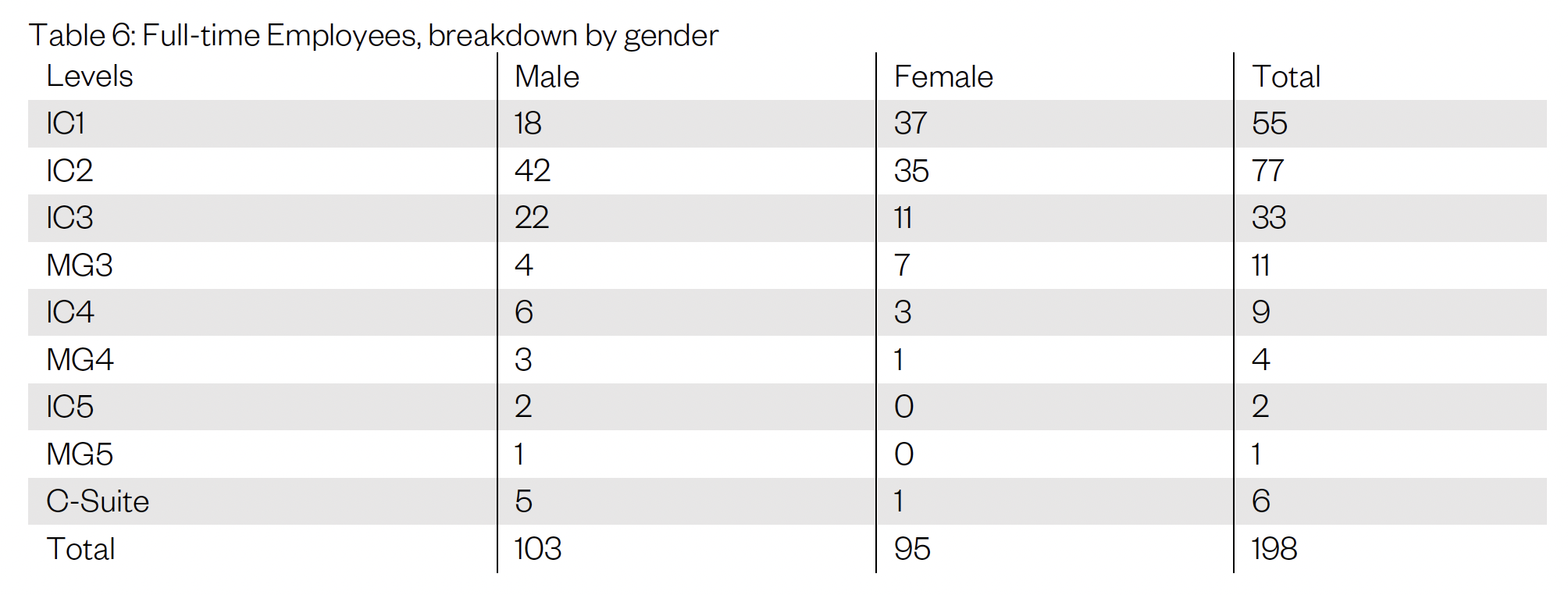
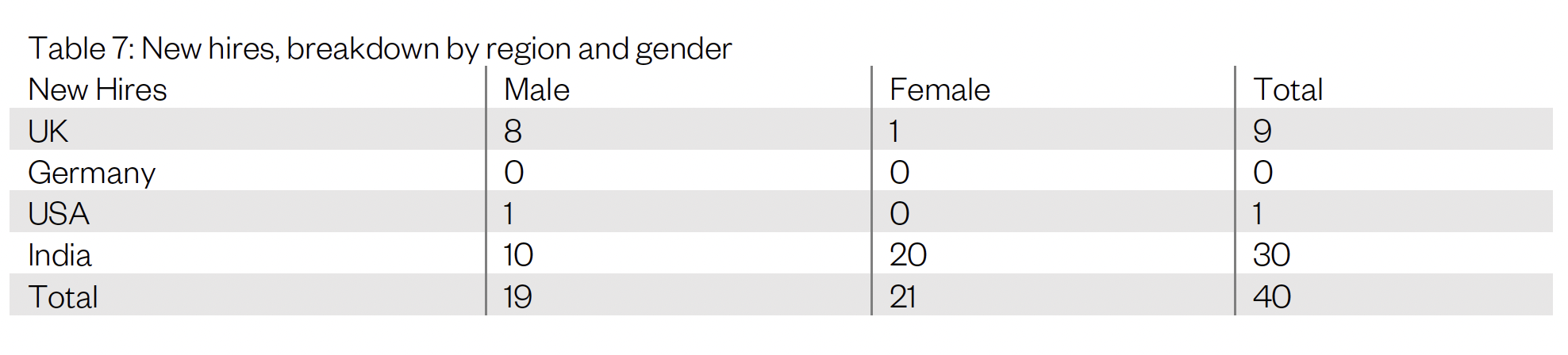
At the overall level our gender balance shows high female representation (Table 6) at 48%, a four percent increase on 2024. However, the distribution of female employees still skews towards less senior roles, with only 5% of females at level 4 or above, compared to 17% of men. New hires (Table 7) skew slightly towards females at 53%, but more work needs done, and increasing female representation in senior and management positions remains a prioity.
The median gender pay-gap within ESG Book is 7.97% (Table 8), while the mean is 60.50% (Table 6), both calculated according to the UK government guidance and methodology. While the median pay gap is relatively low but still, of course, requiring work, the mean is very high. This discrepancy is caused by the previously discussed imbalance at the higher levels of our company (Table 6) and we hope to address this as we increase female represtation at higher levels and start to see the impact of targeted hiring, structured career progression, and compensation alignment initiatives. Additinally, the data is also split
into India and ROW (rest of world) to highlight further structural differences, with each category individually showing much lower mean pay gaps - 20% for India and ~19% for ROW, compared to 61% for the global figure. This is a result of the much more evenly distributed gender balance in the India team compared to the ROW, where most of the highest earners lie.
Data Protection and Privacy
ESG Book takes active steps to protect the data of its employees, clients and other data subjects. We conduct our business in accordance with all applicable Data Protection laws and regulations and in line with the highest standards of ethical conduct.
The ESG Book Data Protection Policy sets forth the expected behaviours of employees and third parties in relation to the collection, use, retention, transfer, disclosure and destruction of any personal data belonging to any data subject This policy outlines how ESG Book implements our commitments and
conforms to the EU’s General Data Protection Regulation (GDPR), the UK GDPR, and the UK DPA 2018.
Additionally, every employee has Endpoint installed on their company laptop to ensure all equipment is data protection compliant. As part of this, the company is restricted from seeing files, passwords, emails, or any private messages, further safeguarding employee privacy.
In the case of data-related incidents, we have a thorough Incident Management Policy and Procedure designed to swiftly identify, address, and resolve incidents that may threaten our core tenets of continuous operation, optimal functionality, and information security.
Our complete range of Risk and Security documentation features specific policies and procedures for each of the following key areas:
- Access Control
- Asset Management
- Incident Management
- Information Management
- Information Security, Third Party Management
- Infrastructure Management
- Remote Working
- Risk Management
- Secure Development
ESG Book was awarded the IS0 27001 certification in Q1 2025, to support our commitment to data security. This certification provides a framework and policies for the secure management of financial information, intellectual property, employee details and information entrusted by third parties.
Human Rights
Our statement on Human Rights outlines our alignment with the UN Global Compact and the UN Principles for Responsible Investment, as well as our commitment to the following standards:
- Universal Declaration on Human Rights
- International Covenant on Civil and Political Rights
- International Covenant on Economic, Social, and Cultural Rights
- International Labour Organisation’s (ILO) Declaration on Fundamental Principles and Rights at Work
- UK Modern Slavery Act 2015.
In alignment with ESG Book’s endorsement of the International Labour Organisation (ILO)’s Declaration on Fundamental Principles and Rights at Work, ESG Book personnel are free to associate and organise themselves collectively in accordance with local laws. ESG Book has never been subject to any
investigation, legal proceedings or incidents involving Human Rights abuses.
All ESG Book staff work on a contractual basis with a strong element of alignment of interest in the success of the business. We do not tolerate forced, coerced, compulsory, or child labour within our business or within that of our business partners.
Our Governance
ESG Book is committed to maintaining high standards of governance to support transparency, accountability, and sustainable growth.
Advisory Board
The company is governed by an Advisory Board, which is composed of representatives from our shareholder organisations. This board plays a critical role in shaping ESG Book’s strategic direction and ensuring alignment with the long-term interests of our stakeholders. While the Advisory Board does not hold formal fiduciary duties, it provides experienced, independent perspectives that help guide the business through key decisions. As of 2025, the Advisory Board comprises six members, including our Chief Executive Officer, Justin Fitzpatrick, and five additional representatives. Of these, one member is female. ESG Book recognises the importance of diversity in leadership and is committed to enhancing representation and inclusion across all levels of governance as the organisation grows.