
The ESG Book Briefing: January 2026

Less disclosure does not mean less scrutiny. As sustainability rules reset across the EU, UK, and US in 2026, banks are entering a period where regulatory expectations are rising faster than the data available to meet them. In this issue, we examine the under-discussed implications of that mismatch—from climate risk pricing in interbank markets to blind spots created by EU simplification—and what leading institutions are doing now to stay ahead.

Regulatory Timeline: What Matters, When
- Jan 2026: EU Taxonomy simplification applies (10% materiality threshold; sharply reduced templates). EBA Pillar 3 Data Hub goes live.
- 11 Jan 2026: EBA ESG Risk Management Guidelines apply (SNCIs: Jan 2027).
- Feb 2026: UK publishes final Sustainability Reporting Standards (ISSB-aligned); voluntary use from FY 2026.
- 10 Aug 2026: First California climate filings due (Scope 1 & 2, FY 2025).
- 31 Dec 2026: ESG Pillar 3 ITS go-live reference date; disclosure scope expands to all institutions.
- 2026–2028: SFDR overhaul continues; PAI revisions pending, no ESA PAI report in 2026.
Look out for our 2025 Regulatory Retrospective white paper, to be published shortly here.

Industry Insights: ESG Implications for Banks
As regulatory scrutiny intensifies and market preferences shift, banks that do not close ESG data gaps or credibly manage climate risk in 2026 risk higher funding costs, reduced investor confidence, and a competitive disadvantage in sustainable finance markets.
Green Financing Exceeds Fossil Profits:
According to Bloomberg research, for the fourth year running, banks earned more from green investments ($3.7bn) than fossil fuels ($2.9bn). Rising demand for renewables, batteries, and electrification has flipped the tables since 2020. Analysts say sustainability now drives growth and deal flow—not just reputation. Read more.
EU Simplification Creates Material ESG Blind Spots:
The exemption of 92% of CSRD companies and a 68% reduction in ESRS datapoints materially shrink the ESG data banks rely on to assess climate risk. Without proactive counterparty engagement and supplemental data collection, institutions risk mispricing climate exposure, facing heightened supervisory challenge, and making capital allocation decisions on incomplete information. Read more
Climate Transition Risk Is Being Priced Into Bank Liquidity:
ECB analysis shows that banks with higher exposure to carbon-intensive sectors pay a clear premium in interbank and repo markets. A one-standard-deviation increase in financed emissions is associated with a 7–12% higher repo rate, with the penalty widening during periods of financial stress. In practice, transition risk is already affecting bank liquidity and margins – not future regulation. Read more.
Marine Shipping’s US $625 billion problem
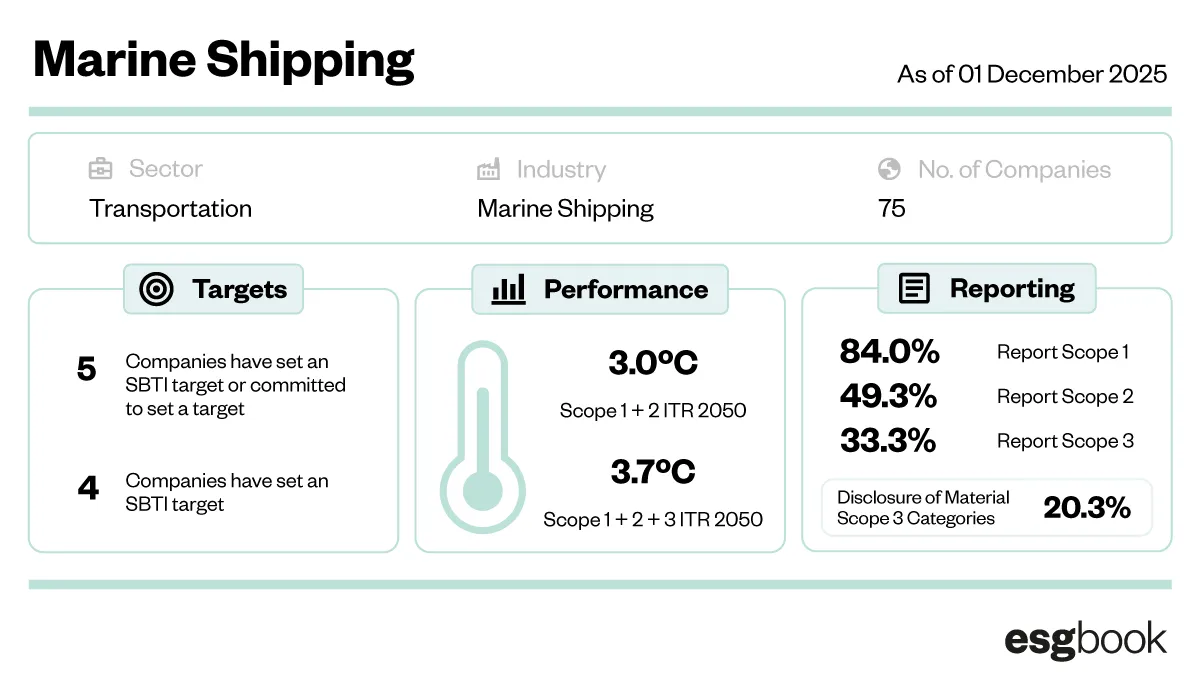
- 77% of marine shipping companies have set GHG reduction targets (according to ESG Book), indicating widespread commitment on paper.
- Yet the emissions data tell a different story: the sector remains misaligned with current policies and the net-zero pathway, indicating that targets are not yet translating into meaningful action.
- Median emissions intensity: Scope 1 – 566.6, Scope 2 – 0.3, Scope 3 – 217.1 (per EVIC). without implementing their GHG reduction targets in practice, shipping companies risk losing access to capital increasingly tied to ESG performance.
For banks, this signals material transition risk in lending, trade finance, and leasing portfolios—but also a clear engagement opportunity. Institutions that move beyond headline targets to assess transition credibility, emissions intensity, and capital investment plans will be better positioned to protect portfolio alignment, meet supervisory expectations, and deploy capital toward credible transition leaders. To view the underlying data driving this analysis, please go to ESG Book’s disclosure platform.
Petrofin estimates global ship finance at approx. US$625bn.
Closing the Carbon Data Gap
Helping corporates without a carbon accounting solution produce higher quality disclosures.
Despite widespread commitments to decarbonisation, actual corporate emissions disclosure remains patchy. According to ESG Book, only around 4,500 companies currently report Scope 1 and 2 emissions in line with the Greenhouse Gas Protocol, and even fewer comprehensively report Scope 3 emissions — leaving a huge portion of corporate carbon impact unreported. This gap prevents lenders and investors from accurately assessing climate risk, identifying high‑emitting exposures, and directing capital toward credible decarbonisation pathways; without closing it, progress toward net‑zero will remain opaque and capital tied to sustainability goals may be misallocated.
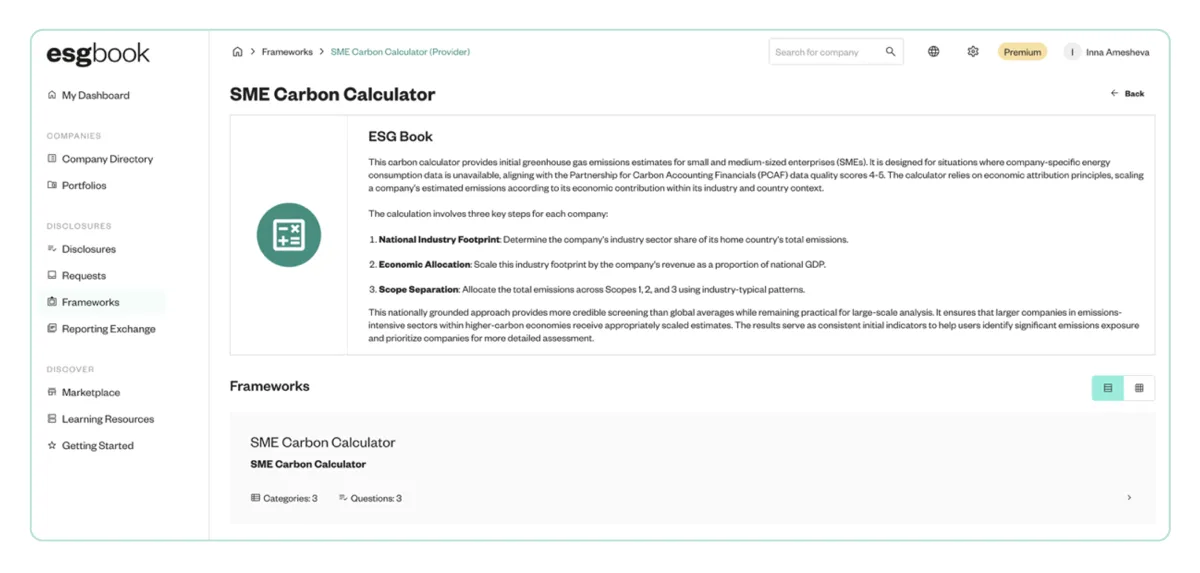
ESG Book’s new carbon calculator tool helps solve this by providing credible, nationally grounded and comparable screening-level estimates aligned with PCAF and GHG Protocol standards. It gives corporates disclosing on our platform a reliable starting point for Scopes 1, 2, and 3 emissions, even without detailed data. The result? Faster portfolio screening, better insight into high‑emitting exposures and support for sustainable finance decisions.
Already a client? The SME Carbon Calculator is live and ready when you request data from your own portfolio.
New to ESG Book? Learn more about how we help you engage your counterparties and suppliers to fill your data gaps using our Engage solution, or get in touch to learn more about how the carbon calculator works. to learn more about how the carbon calculator works.

Driving Impact Through Collaboration
Supply chain decarbonization case study
One of the world’s largest banking groups and a sustainability leader needed accurate and scalable emissions data from over 700 suppliers. Using ESG Book’s disclosure and emissions calculation engine, the Bank simplified supplier reporting, filled data gaps, validated submissions, and integrated results directly into internal systems. Learn More
Partnership with Tareno AG on portfolio engagement and ISR label compliance
Firms managing ~€800+ billion AuM under ISR labels must now demonstrate deeper compliance and ongoing reporting capabilities – an expensive and resource‑intensive task without automation. By combining Tareno AG’s stewardship approach with ESG Book’s digital disclosure infrastructure, we’ve created a streamlined process that supports both investors and companies. Read more.
Partnership with PANTA
We have partnered with PANTA to integrate ESG Book’s comprehensive sustainability data into the PANTA Lab platform. This integration provides asset managers with access to transparent insights for sustainable index design and back-testing. Our scalable solutions empower PANTA Lab users to build more sophisticated and reliable ESG-integrated indices through a streamlined digital workflow. Read more
Recent Publications and Events
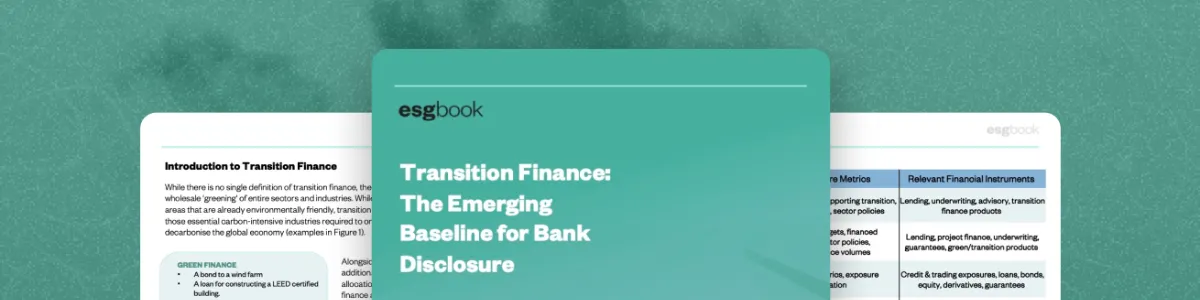
- Transition Finance: The Emerging Baseline for Bank Disclosure. Read the full article.
- Webinar: Banking the Transition: ESG Regulation in 2026 — The Data Balancing Act Post-Omnibus.
When: 11 February 2026, 1pm GMT Register here